
It can often feel like your living room has been completely conquered by an army of toys. If you're stepping over building blocks and shoving dolls under the sofa just to find a place to sit, you’re not alone. The secret to winning back your space isn't about banning toys; it's about getting clever with toy storage ideas for small spaces.
Think vertical solutions, multifunctional furniture, and smart organisation systems. This is how you transform a chaotic playroom-turned-living-room into a calm, inviting environment for everyone.
Reclaiming Your Home from Toy Overload
Let’s be honest, trying to keep a small home tidy with children is a constant battle. It’s a challenge I’ve seen countless families face, especially when every square metre is precious. The goal here is to move beyond those temporary fixes—the frantic tidy-up before guests arrive—and create a system that actually works long-term.
We're not just talking about cleaning up. This is about redesigning your space in a small way to create a home that feels both orderly for you and wonderfully playful for your children.
Why Smart Storage Matters More Than Ever
In the UK, where 84% of us live in urban areas and new-build homes are getting smaller, making the most of our space is essential. This isn’t just a feeling; it’s a reality that has completely changed how we need to think about home organisation.
This shift is precisely why the market for clever, space-efficient organisers has grown. We're all looking for ways to live comfortably in the space we have.
In fact, recent data shows that a staggering 65% of UK parents with children under five say 'space constraints' are their biggest clutter challenge. This frustration has fuelled demand for minimalistic living and smart solutions. You can explore more about these market trends and see how they’re shaping modern family homes.
This isn’t about endlessly buying more storage bins. It’s about making strategic choices that fit your home and your family’s rhythm. Let’s turn this frustrating problem into a creative design opportunity, starting with some high-impact changes you can make right away.
Assess Your Space and Declutter with Purpose
Before you even think about buying a single storage box, take a deep breath. The single biggest mistake I see parents make is rushing out to buy solutions before they’ve properly understood the problem. The best toy storage ideas for small spaces start with a plan, not a panicked shopping trip.
So, let's start with a realistic look at the space you actually have. Grab a tape measure and get ready to see your room in a new light. What’s the clearance under the cot? How much empty wall is there above the chest of drawers? These forgotten nooks and crannies are your secret weapons. For example, that awkward 30cm gap beside the wardrobe could be the perfect spot for a slim, wall-mounted spice rack to hold small books or toy cars.
Measure Twice, Plan Once
Once you know your dimensions, you can start zoning. This sounds technical, but it’s really just about giving different activities a designated home, which helps prevent the entire room from becoming one giant, chaotic play-pit. Even in the tiniest room, creating a few distinct areas makes tidying up so much more intuitive for you and your little one.
Think about creating a natural flow with a few simple zones:
- Play Zone: This is the main event. A soft rug and a few open baskets with the toys currently in rotation are all you need. For example, have one basket for building blocks and another for toy animals, making it easy for a child to choose and tidy.
- Storage Zone: This is the "home base" for your main storage units, like a cube organiser or shelving. It’s where everything gets returned to at the end of the day. Placing it near the door can make for a quick tidy-up before leaving the room.
- Quiet Zone: A comfy beanbag or a small nook with a few books creates a little sanctuary for calmer moments, away from the main toy explosion. You could place a few picture ledges on the wall above the beanbag to display their favourite stories.
Decluttering and The Toy Rotation System
Now that you’ve mapped out your space, it’s time to face the mountain of toys. Getting your children involved can be surprisingly effective. Frame it as choosing their favourites, not getting rid of things. The goal here isn’t to be ruthless, but to introduce a system that will genuinely change your life: the toy rotation system.
A toy rotation system is an absolute game-changer for small spaces. It reduces overstimulation for your child, makes old toys feel brand new again, and dramatically cuts down on the daily tidying marathon. We dive deeper into setting one up in our guide to effective kids' toy storage solutions.
The idea is wonderfully simple. You keep a manageable number of toys out and accessible, and you store the rest away. Every few weeks or once a month, you swap them over. I find it easiest to group them by type before boxing them up for rotation:
- Building Toys: LEGOs, Duplo, magnetic tiles, wooden blocks.
- Creative Play: Art supplies, play dough, craft kits.
- Imaginative Play: Dress-up clothes, dolls, action figures, play food.
- Puzzles and Games: Board games, floor puzzles, and learning games.
This simple journey from chaos to calm is what it's all about.
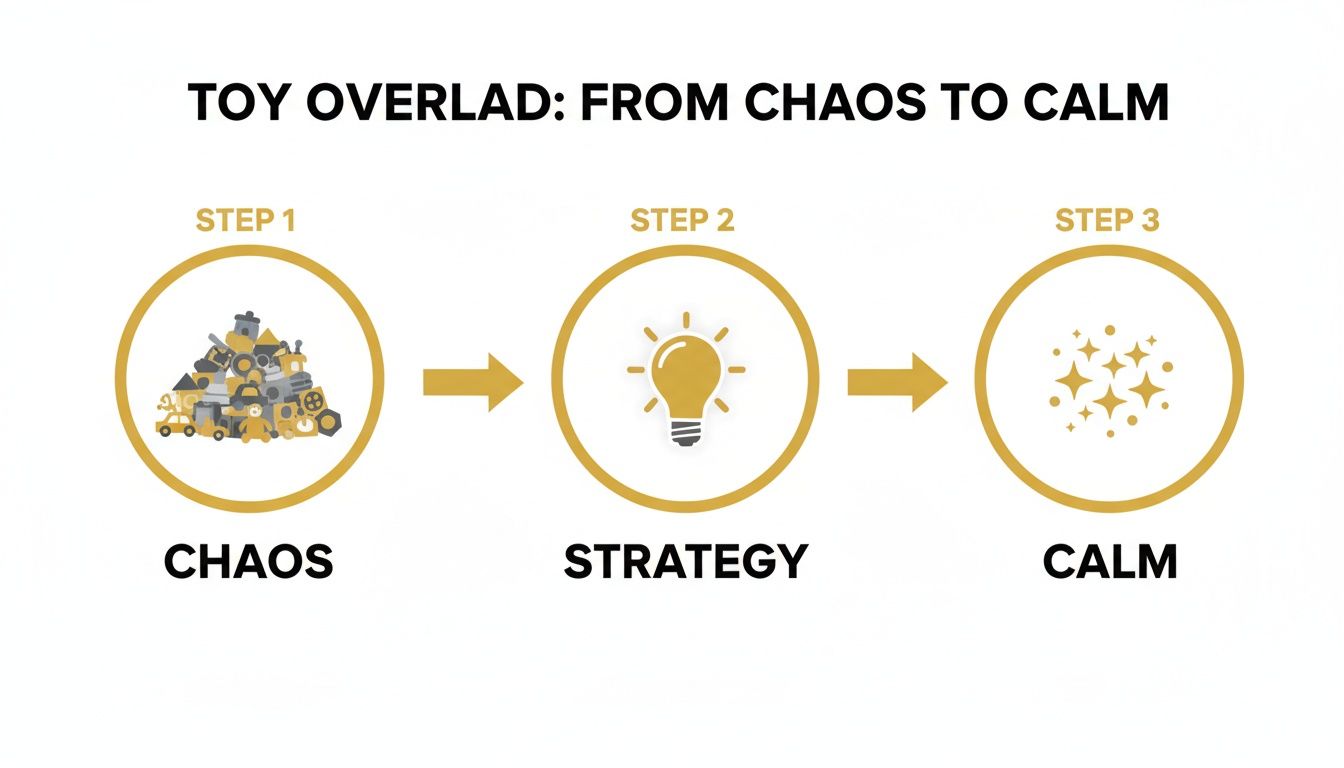
By starting with a solid assessment of your space and a smart rotation plan, you're not just tidying up for today—you're building a foundation for a calmer, more organised home for the long run.
Thinking Vertically and Multifunctionally
Once you’ve zoned your room and had a good clear-out, it’s time to shift how you look at the space itself. When you’re short on floor space, the only way to go is up. Your walls aren't just there to hold the ceiling up; they're prime real estate for getting toys off the floor and out of the way.
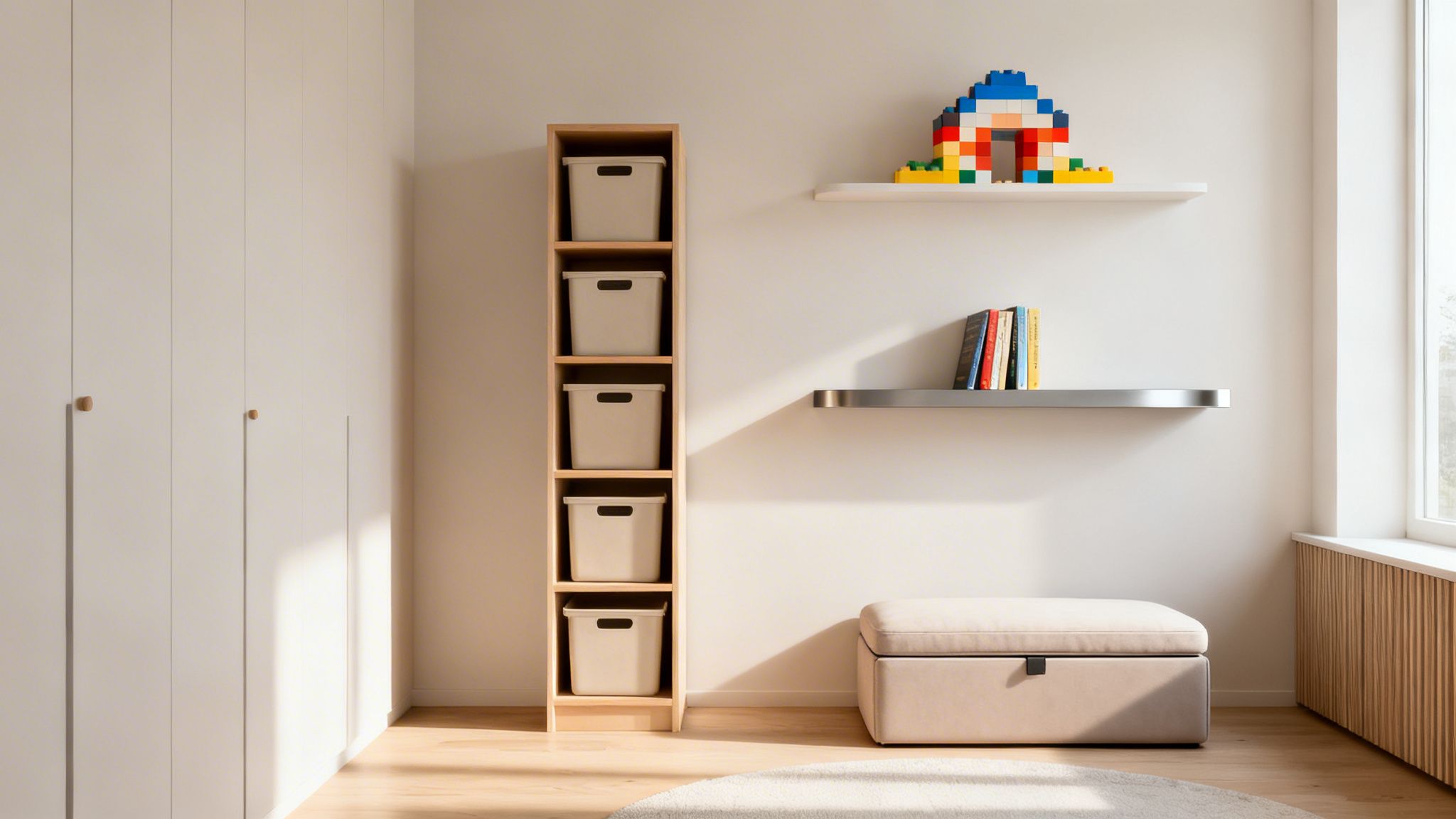
This is about more than just sticking up a few extra shelves. It's a two-pronged attack: thinking vertically and making every single piece of furniture earn its keep. Combine these two strategies, and you'll be amazed at how much storage you can create without eating into that precious play area.
Maximise Your Vertical Real Estate
Using tall, narrow furniture is a classic interior design trick to make a room feel bigger. For us, it’s also an incredibly smart way to store toys. It’s time to think beyond the traditional toy box on the floor.
- Tall, Narrow Shelving: A slim shelving unit, like the IKEA BILLY bookcase, tucked into an alcove can hold a surprising number of baskets and bins. I find these are perfect for corralling all those little bits and bobs—think smaller play sets, craft supplies, or collections of figures.
- High Wall Shelves: Use the wall space above head height for things that aren’t needed every day. For example, a shelf above the bedroom door is a brilliant spot for finished LEGO masterpieces, special sentimental toys, or the next batch of toys in your rotation system.
- Wall-Mounted Book Ledges: These are a game-changer. They take up virtually no floor space compared to a traditional bookcase and display books with the covers facing out, which is far more enticing for little ones looking for a story.
This whole approach isn't just a clever hack; it's a direct response to modern family life. With many of us living in smaller homes, it's no surprise that the UK's kids' storage furniture market is set to reach USD 3,436.0 million by 2030. Bookshelves are leading the pack, and I’ve seen how simple additions like under-bed drawers can slash visible clutter by as much as 60%. You can discover more about the growth of kids' storage solutions and see how these ideas are changing homes.
The Power of Multifunctional Furniture
The other half of the strategy is making sure your furniture works hard. In a small room, every item needs to justify its footprint. This is where clever, dual-purpose furniture becomes your secret weapon, blending storage seamlessly into the room.
I always tell my clients to look at every piece of furniture as a storage opportunity in disguise. That ottoman isn't just a footrest; it's a secret home for dress-up clothes. A child's bed isn't just for sleeping; it's a base for deep under-bed drawers full of train sets.
Here are a few of my favourite real-world examples:
- Storage Ottoman: In a living room, a stylish velvet or bouclé ottoman can discreetly hide bulky items like stuffed animals, blankets, or costumes, while also giving you an extra seat when guests are over.
- Play Table with Drawers: A play table with built-in drawers is brilliant. One practical example is the IKEA FLISAT table, which has space underneath for TROFAST bins to keep art supplies or building blocks contained right where they're being used, making clean-up so much easier.
- Cube Organisers: You can't go wrong with a versatile unit like the IKEA KALLAX. Add a cushion on top and it’s a bench. Put it under a window and it’s a reading nook. It can even work as a room divider, all while offering fantastic, compartmentalised storage. If you want to make the most of these, have a look at our guide to using storage cubes effectively.
By embracing both vertical and multifunctional storage, you’ll create a room that not only feels bigger and looks tidier but also works smarter for the entire family.
Choosing Smart Storage That Grows with Your Child
Children change at a dizzying pace, and their toys evolve right along with them. Today’s chunky toddler blocks are tomorrow’s intricate LEGO sets, and before you know it, you’re dealing with art supplies, science kits, or sprawling collections of figures. If you're not careful, you can get stuck in a constant cycle of buying new storage, only for it to become useless a year later.
The secret is to think long-term from the very beginning. By choosing modular and customisable pieces, you’re building a system that can be reconfigured as your child’s needs change. It’s a genuine investment that saves you frustration and money down the line, making it one of the smartest toy storage ideas for small spaces.
Invest in Adaptable Systems
When you’re planning for the future, modular storage is your absolute best friend. These aren’t the cheap, flimsy bins that crack and get relegated to the loft. We’re talking about systems designed to be changed, expanded, and rearranged over the years.
A perfect example, and one that’s famous for good reason, is the IKEA TROFAST system. You could start with a low, floor-level frame that’s just right for a toddler to grab their own toys. As they get taller, you can swap it for a taller frame or even mount the units on the wall to reclaim precious floor space.
The real genius, though, is in the interchangeable bins. Start with large tubs for bulky Duplo bricks. A few years later, you can swap them for smaller, sectioned trays perfect for organising tiny LEGO pieces, beads, or art supplies. It’s this adaptability that means the same core system can stay with your family for a decade or more.
Make It Personal and Part of the Decor
Storage doesn't have to be a bland, utilitarian afterthought. When it’s done well, it can become a beautiful and personal part of your child’s room. Adding personalised touches can turn a simple set of drawers into something they genuinely cherish, which has a brilliant knock-on effect: they’re more likely to use it.
When storage feels like it truly belongs to a child, they take more pride in it. A simple name on a toy box or a designated display for their most prized possessions encourages a sense of ownership and responsibility.
Here are a few ways I’ve seen this work beautifully:
-
Custom Name Displays: Pieces like these personalised building brick letters add a fantastic pop of colour and personality. You can stand them on a shelf or mount them on the wall to instantly define the space as theirs.
-
Organisers for Specific Collections: If you’re navigating a sea of Tonies or LEGO minifigures, getting a purpose-built stand is a game-changer. At TidyCubs, we design our Tonie and minifigure stands to not only organise the chaos but display them in a way that turns a collection into cool decor.
-
Colour Coordination: This is such a simple but effective trick. Choose storage bins and boxes in colours that match the room's theme. For example, in a room with a navy blue and white nautical theme, choosing navy storage bins and white shelves creates a cohesive, intentional look that feels stylish instead of cluttered.
By picking storage that is both adaptable and personal from the start, you’re creating a system that won’t just grow with your child but will also reflect their unique personality, helping keep your home beautifully organised for years to come.
Balancing Style with Essential Safety
Getting a room organised doesn’t mean it has to feel clinical or dull. Once you’ve wrestled the main storage systems into place, it’s the finishing touches that really bring a space to life. This is where you get to blend your practical toy storage ideas for small spaces with your home's unique personality.
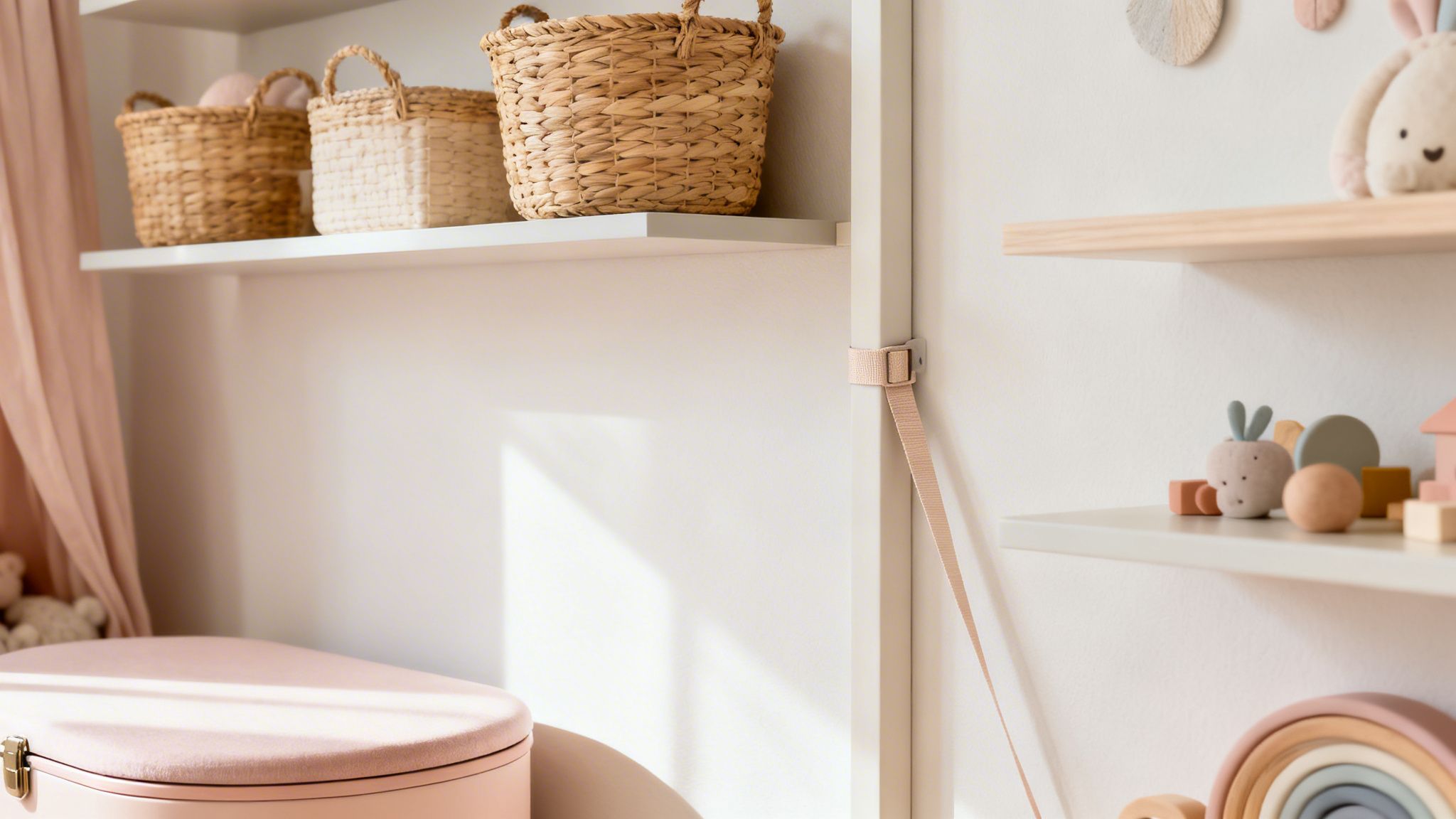
One of the simplest tricks I’ve seen work time and again is using colour to tie everything together. For example, why not pick out some decorative baskets or fabric bins in a colour that echoes the curtains, a piece of wall art, or the duvet cover? This small move makes the storage feel intentional—like it’s part of the decor, not just an afterthought. For more inspiration on this, have a look at our guide to stylish and practical nursery decor ideas in the UK.
Child-Proofing Your Storage
But here’s the thing: while making a room look beautiful is the fun part, nothing matters more than safety. A wonderfully organised room is only a success if it’s a genuinely secure environment for play. There are a few safety checks that are simply non-negotiable.
First and foremost, you absolutely must secure any tall or heavy furniture to the wall. Bookshelves, cube units, and chests of drawers can become a serious tipping hazard if a curious child decides to use them as a climbing frame. Always use the anti-tip hardware that comes with new furniture, or pick up a cheap anchoring kit from any hardware shop. It's a five-minute job that provides priceless peace of mind.
When you're choosing storage, take a moment to consciously check for child-friendly features. That little bit of extra thought upfront can prevent accidents and lets you relax, knowing your child is safe.
It's also crucial to look at the finer details of the storage solutions themselves. A few things to keep a sharp eye on include:
- Lid Safety: Steer clear of toy chests with heavy, slam-shut lids. Look for designs with soft-close safety hinges that prevent the lid from dropping. Even better, opt for open-front bins or lightweight wicker baskets with removable lids, which pose no risk to tiny fingers.
- Materials and Finishes: Always choose storage made from non-toxic materials and paints, particularly for furniture in a baby’s or toddler’s room. For wooden items, look for smooth, sanded edges and rounded corners to prevent any scrapes or bumps during playtime.
By carefully weaving these safety essentials into your styling choices, you create a room that isn't just tidy and beautiful, but a true safe haven where your child can explore, play, and grow.
Frequently Asked Questions About Toy Storage
Even the most perfect plan can hit a snag once you start pulling everything out of the cupboards. When you're trying to reclaim a small space from a mountain of toys, some very specific challenges always seem to crop up.
Let's dive into some of the questions I get asked all the time. Think of this as the troubleshooting section for when you're knee-deep in a project and need a quick, practical answer.
How Do I Store Tiny Toys Like LEGOs?
We’ve all been there. One wrong step in the dark and the sole of your foot discovers a stray LEGO brick. For those millions of tiny pieces—be it LEGOs, beads, or doll shoes—the solution needs to be two things: contained and visible. If a child can't see it, they won't play with it.
My go-to is always a system with lots of small, easy-to-manage compartments.
- Small Drawer Units: Those clear plastic drawer sets you often see for storing screws or craft supplies are fantastic. For a practical example, a small desktop unit with 9 clear drawers can be used to sort LEGOs by colour or keep tiny L.O.L. Surprise! doll accessories together.
- Clear, Stackable Bins: Look for food-grade containers with proper clip-on lids. They stack neatly, keep dust out, and you can see the contents in a second. A set of A4-sized clear boxes, for instance, is perfect for storing individual craft kits or bead sets.
- Smart Wall Solutions: A magnetic strip, like the ones used for kitchen knives, is genius for holding all those little metal cars like Hot Wheels. Another great trick is to use a clear, over-the-door shoe organiser—the pockets are the perfect size for action figures or Barbies.
This way, you’re not just storing the tiny bits; you’re making them easy to find and, crucially, easy to put away. It ends the frustrating hunt for that one specific pink brick.
How Can I Get My Child to Help Tidy Up?
Getting kids on board with tidying has less to do with the system itself and more to do with making it ridiculously easy for them. If a child struggles with a heavy lid or can’t reach the shelf, they’ll simply walk away.
The goal is to make tidying up so simple a five-year-old can do it in under five minutes. When it’s that effortless, you’ll find the daily tidy-up battle just… stops.
Forget nagging. It’s all about building a simple, repeatable habit. Here’s what really works:
- Picture Labels: Before they can read, a simple drawing or a photo of blocks or cars on the front of a basket is a game-changer. It takes all the guesswork out of where things belong. You can easily find printable picture labels online.
- Go Lidless: For everyday toys, ditch the lids. Open-front bins or low baskets are perfect. It’s so much easier for a small child to just toss their toys back in. For example, use a large, soft-sided laundry hamper for all the stuffed animals.
- Make It a Game: The "Tidy-Up Timer" is a classic for a reason. Set a timer for five minutes and challenge everyone to get the toys back in their homes before the buzzer goes. A little friendly competition works wonders.
When the process is visual and fun, you’re not just cleaning a room; you’re teaching them a skill without it feeling like a punishment.
Where Can I Store Bulky Toys with No Closets?
No closet space? No problem. It just means your furniture needs to start pulling double duty. This is where you have to get creative and find storage in places you might have ignored before.
The biggest mistake I see is people only thinking about floor-level storage. That’s the fastest way to shrink an already small play area.
- Go Vertical: Tall, narrow shelving units are brilliant. They draw the eye upwards and use wall space that would otherwise be wasted. For example, you can pop a shelf above a doorway for sentimental items or toys that aren't in the current rotation, like a large doll's house.
- Hide in Plain Sight: An ottoman with built-in storage is your secret weapon; it can swallow an entire mountain of stuffed animals. Likewise, a cabin bed with deep drawers underneath is the perfect home for bulky train sets or board games.
- Look Underneath: If your sofa or armchairs have legs, you might have the perfect gap for slim, rolling storage boxes. They slide right under and are ideal for stashing things like floor puzzles or play mats. For example, IKEA's VARDÖ underbed box is a great option that fits under most beds and sofas.
By using every nook and cranny, you can find a home for even the most awkward, oversized toys and finally get your floor back.
Ready to create a space with storage that’s as beautiful as it is clever? At TidyCubs, we design personalised and adaptable storage solutions right here in the UK. Discover our range of display stands, custom name signs, and organisers that grow with your child. Explore the TidyCubs collection and find your perfect storage solution today.