
Let’s be honest. That feeling of looking at a playroom floor completely covered in toys, books, and art supplies is something every parent knows well. A children's table with storage is one of the best ways to bring calm to that chaos, giving your child their very own space to create. Think of it as their first proper workstation—a personal hub for drawing, building, and eventually, homework.
It’s Much More Than Just a Place to Draw
A dedicated activity table isn't just about containing clutter; it's about creating an environment that encourages independence and helps good habits take root early on. When you give them a specific spot for their creative projects, you're empowering your child to take charge of their own play and, just as importantly, their own tidying up. For example, instead of crayons being scattered across the living room floor, they have a dedicated drawer right where they are used. This simple change adds a surprisingly powerful tool for adding a bit of structure to both playtime and learning.
It's no surprise that parents across the UK are catching on. The market for kids' storage furniture, which includes these clever multi-purpose tables, hit a huge USD 853.5 million in 2023. This isn't just a passing trend; it reflects the reality of modern family life, where homes, especially in cities like London and Manchester, often have limited space, making dual-purpose furniture a lifesaver. You can see more data on this growing market over at Grandviewresearch.com.
The Core Benefits for Your Child's Development
Bringing a children's table with built-in storage into your home pays off in more ways than one, actively supporting how your little one grows and learns.
- Fosters Independence: With everything they need right at their fingertips, children learn to start and stop activities all by themselves. For example, a toddler can grab their own pot of chunky crayons from a cubby, and a seven-year-old can get their homework folder, pencil, and ruler from a drawer without asking for help. It’s a real confidence booster.
- Encourages Organisation: Suddenly, cleaning up becomes less of a chore and more of a simple sorting game. A practical example is using picture labels on drawers for "crayons," "paper," and "blocks." This teaches even pre-readers how to categorise their belongings and put them back where they belong.
- Defines a Creative Zone: It sets a clear boundary, signalling that this is a special place for imagination and focus. This separation from general play or sleeping areas helps children concentrate on whatever they're doing, whether it's building a LEGO masterpiece or practising their letters.
A great table is like a child's first desk, workbench, and art studio all rolled into one. It’s a space where they learn to manage their own little world, one crayon and building block at a time.
Ultimately, these tables are a smart investment—not just for a tidier home, but for your child's developing skills. For a little more inspiration on getting everything organised, check out our guide on playroom storage ideas.
Right, you've decided a children's table with storage is the way to go. But now comes the real puzzle: which storage style is the right fit for your home and your little one?
It's not a one-size-fits-all situation. The best choice really hinges on your child's age, what they love to do, and frankly, your own sanity levels when it comes to clutter. Think of it less like buying furniture and more like choosing the perfect toolkit for their imagination. A budding artist needs different compartments than a master builder, just as a toddler’s needs are worlds apart from a school-aged child's.
From hidden nooks to pull-out drawers, we'll walk through the main options. Getting to grips with the good and the bad of each style will help you land on a table that makes playtime flow and tidying up less of a battle.
This little flowchart can help you see if you're on the right track. It's a simple way to check if a storage table is truly the answer to your playroom prayers.
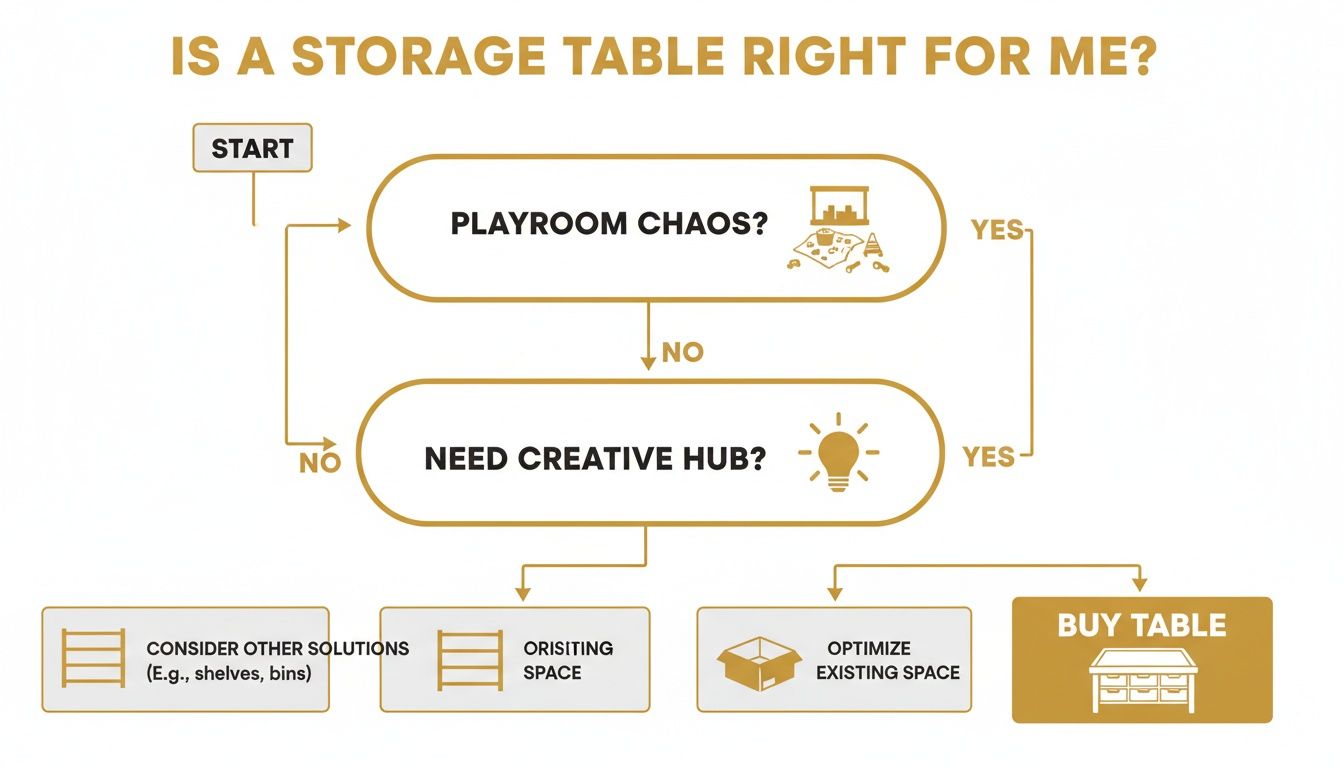
As you can see, if you're wrestling with a chaotic playroom and want to carve out a dedicated space for creativity, a storage table is a brilliant move. It’s your secret weapon for turning that mess into a functional, inspiring hub for your child.
To make sense of the choices, this table breaks down the most common storage types, giving you a quick overview of what works for who and why.
Comparing Storage Styles for Childrens Tables
| Storage Type | Best For | Pros | Cons |
|---|---|---|---|
| Lift-Top | Stashing bulky toys (e.g., train sets, large building blocks); maintaining a tidy, minimalist look. | Huge single compartment hides lots of clutter; clean aesthetic when closed. | Can be heavy for small kids to open; risk of trapped fingers without safety hinges. |
| Drawers | Older children with lots of art supplies (e.g., pens, paints, sticker sheets) and small items. | Excellent for organisation; teaches kids to categorise; keeps surfaces clear. | Can be tricky for toddlers; small items can get lost at the back. |
| Cubbies & Bins | Toddlers and younger children; quick and easy clean-ups for items like Duplo or dress-up clothes. | Kids can see and access toys easily; removable bins make tidying up simple. | Open storage can look messy; not ideal for very small, fiddly items. |
Now that you've got the big picture, let's dive into the details of what makes each of these styles tick.
H3: Lift-Top Tables: The Treasure Chest Approach
Think of lift-top tables as the ultimate 'hide-and-seek' champion. The entire tabletop lifts up, revealing one big compartment inside, just like a classic treasure chest.
This design is an absolute lifesaver for hiding away those awkwardly shaped or bulky toys. A practical example is stashing a complete wooden train set or a large bag of Magna-Tiles®. When the lid is down, everything vanishes, leaving you with a beautifully clean and uncluttered surface. The one non-negotiable feature? Soft-close safety hinges. You absolutely must choose a model with these to prevent the heavy lid from ever slamming down on tiny fingers.
H3: Tables with Drawers: For The Little Organiser
If your child’s collection of pens, pencils, and craft bits seems to be growing by the day, a table with built-in drawers could be your saviour. Drawers are simply fantastic for sorting all those smaller items and keeping them neatly out of sight.
- A Real-World Setup: A great practical use is to dedicate one drawer for crayons and markers, another for paper and sticker sheets, and a third for craft materials like pom-poms and googly eyes. It’s a gentle way to teach children that everything has its place. For a deeper dive into organisation, our guide on making the most of storage systems like the IKEA Trofast is packed with ideas.
Drawers tend to work best for slightly older children who have developed the fine motor skills to open and close them without a struggle and can remember where they put their favourite things.
Think of drawers as a mini filing cabinet for creative projects. They promote a methodical approach to tidying and keep the tabletop clear for the important business of drawing, writing, or homework.
H3: Cubbies and Bins: Easy Access, Speedy Clean-Ups
For toddlers and younger children, you can't beat the practicality of open cubbies or tables that come with removable bins. The visibility is key here—kids can see their toys at a glance and grab what they want without needing an adult to help.
The removable bins are the real game-changer at tidy-up time. A perfect example is your child pulling a whole bin of Duplo out, tipping the contents onto the floor, and then popping everything back in before sliding it away. This "grab-and-go" approach makes cleaning up a simple, manageable task that even the littlest ones can start to master.
Choosing the Right Size and Placement
Finding the perfect children's table with storage goes beyond just picking a fun colour. If you want it to become a well-loved creative hub, it needs to fit both your child and your home just right. Getting the size spot-on is everything for good posture and comfort, while smart placement can turn a forgotten corner into their favourite activity zone.
First things first, let's talk ergonomics. A table that’s too high or too low will have your little one squirming and uncomfortable, which is a surefire way to put them off using it. The aim is simple: when they’re sitting, their feet should be flat on the floor, their knees bent at a 90-degree angle, and their elbows resting comfortably on the tabletop.
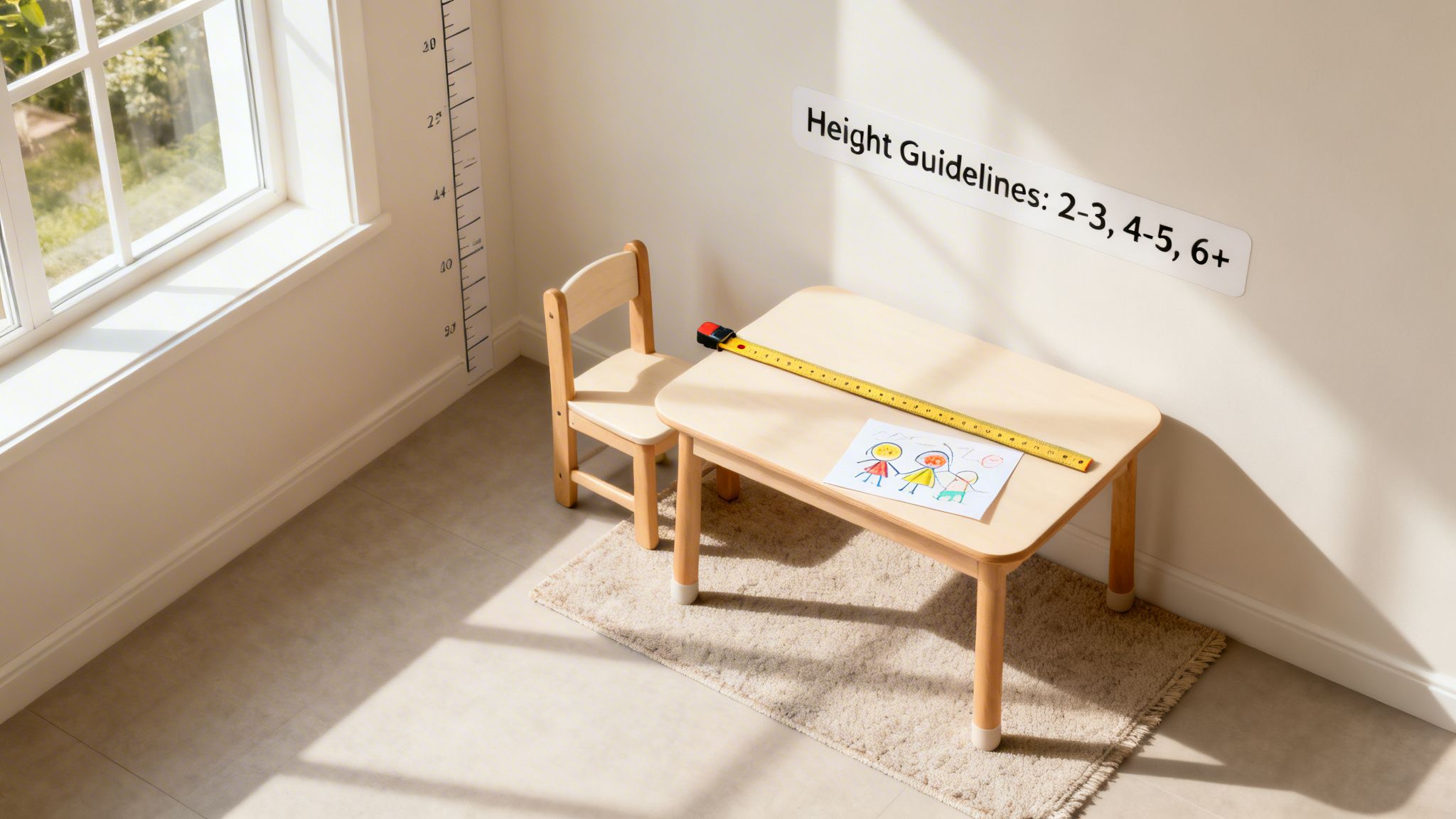
This simple setup prevents slouching and means they can get lost in their play, rather than wriggling around to get comfy. Think of it as setting up their very first workstation; good habits really do start early.
Sizing Up Your Space and Child
To nail the dimensions, this simple guide is your best friend. It helps you match the table and chair heights to your child’s age, creating the ideal setup for hours of happy creativity.
| Child's Age (Years) | Recommended Chair Height | Recommended Table Height |
|---|---|---|
| 2-3 | 25-30 cm (10-12 inches) | 46-50 cm (18-20 inches) |
| 4-5 | 30-35 cm (12-14 inches) | 50-55 cm (20-22 inches) |
| 6-8 | 35-43 cm (14-17 inches) | 55-63 cm (22-25 inches) |
Once you’ve got the size sorted, it’s time to think about where the table will live. Of course, you’ll need to measure the floor space, but don’t forget to consider traffic flow. For instance, don't place it right in the doorway to the kitchen, where it will constantly be in the way. The goal is to create a "creative cockpit" that feels like a special destination, not an obstacle course in a busy hallway.
A well-placed table is an invitation to create. It should be easy to get to for daily use but tucked away just enough to minimise distractions and carve out a proper zone for focus and fun.
Smart Placement Ideas for Any Home
The real beauty of a children's table with storage is just how versatile it is. You really don’t need a massive, dedicated playroom to make one work. Here are a few tried-and-tested ideas for fitting one in.
- The Playroom Corner: This is the classic choice for a reason. Pop the table in a bright corner to create a distinct arts and crafts station, keeping it separate from the chaos of bigger toys.
- The Bedroom Nook: A small table can fit beautifully into an unused nook in your child's bedroom. It makes a quiet spot for drawing, reading, or homework, away from the hustle and bustle of family life.
- The Living Area Zone: If you're tight on space, why not integrate the table into your main living area? A practical example is placing it against a wall or behind the sofa. This creates a defined kids' zone within your shared family space.
Your Parent's Checklist for Materials and Safety
When you’re bringing any new furniture into a child's space, nothing matters more than safety and durability. This is especially true for a storage table, which will inevitably become the heart of your little one’s creative world and bear the brunt of some very energetic play. Your first big decision—choosing the right material—will influence everything from how it holds up over time to how easy it is to wipe clean after a messy art session.
It’s a choice that more and more parents are facing. The UK market for kids' furniture hit USD 2.01 billion in 2023, and it’s still growing. With over 62% of UK parents now setting up dedicated playrooms or bedrooms for their children, the need for smart, safe furniture is booming. This is also driven by the 1,500+ new daycare facilities opening each year to support working families. Thankfully, this demand has pushed manufacturers to step up their game, making features like anti-tip designs and soft-close mechanisms more common to meet updated UK safety regulations. You can get a deeper look into these trends in the full research on UK kids' furniture.
Choosing the Best Material
So, where do you start? Let's walk through the three most common materials you'll find and what they mean for your family.
-
Solid Wood: Think of materials like pine, beech, or birch. Solid wood is the classic choice for a reason—it’s incredibly tough and can take years of knocks and bumps. A practical example of its durability is being able to sand down a scratch or crayon mark and refinish it, making the table look new again. While it’s usually the priciest option, a good wooden table can be a real investment.
-
MDF (Medium-Density Fibreboard): As an engineered wood, MDF is a brilliant, budget-friendly alternative. Its surface is perfectly smooth, which makes it ideal for the vibrant, colourful painted finishes kids love. It's also a doddle to clean. The trade-off? MDF is heavier than solid wood and doesn't love water, so you’ll want to be quick about wiping up any spills from a water pot.
-
Plastic: Often found in bright, fun shapes, plastic tables are lightweight and wonderfully easy to clean, making them a fantastic choice for messy sensory play with sand or slime. They are typically the most affordable, but that often comes at the cost of sturdiness. A plastic table might not have the same staying power as its wood or MDF counterparts.
Your choice of material sets the foundation for safety and durability. Solid wood is a timeless workhorse, MDF offers colourful versatility, and plastic provides easy-clean fun—each with its own set of considerations for your family's needs.
The Non-Negotiable Safety Checklist
Beyond the build material, a few safety features are simply essential. Keep this checklist handy when you're comparing tables to make sure you’re choosing a truly secure piece of furniture.
-
Rounded Corners and Edges: Sharp corners and active toddlers are a bad mix. Always look for designs that have smooth, rounded edges to help prevent bumps and scrapes during playtime.
-
Certified Non-Toxic Finishes: Little ones have a very hands-on (and sometimes mouths-on) way of exploring the world. It’s crucial that the table’s paints and finishes are water-based, non-toxic, and certified as child-safe.
-
Stable, Anti-Tip Design: A good table needs a solid, wide base that won't wobble or tip over if a child leans on it or tries to climb up. For example, look for tables with splayed legs, as this wider footprint adds significant stability.
-
Soft-Close Hinges: If you've got your eye on a lift-top storage table, soft-close safety hinges are a must. This simple mechanism stops the lid from slamming shut, giving you peace of mind and protecting tiny fingers from getting caught.
Personalising Your Child's Creative Space
Any table can offer a surface to play on, but creating a space that’s truly theirs is what sparks real joy and a sense of ownership. It’s about moving beyond generic, off-the-shelf furniture and creating a special station that reflects your child’s unique personality. This transforms a simple children's table with storage into a personal hub they are genuinely excited to use.
This is where modular and customisable options really come into their own. Instead of settling for a one-size-fits-all solution, you can build a setup that grows right alongside your child's ever-changing interests. The goal is to make their little corner of the world a place they’ve helped design—one that also happens to be wonderfully organised.
Building a Themed Activity Zone
Think of the table as the foundation for a whole world. A simple piece of furniture can become the centrepiece of a much grander creative vision, serving as a launchpad for their imagination.
Here are a few practical examples to show you what I mean:
- For the LEGO® Builder: Pair their table with matching building brick display stands. This gives them a dedicated spot to build and a proud place to show off finished models, keeping delicate creations out of harm's way.
- For the Dinosaur Explorer: Choose a table in earthy greens or browns. You can add matching shelves for their dinosaur figures and label storage bins with dinosaur footprints to complete the prehistoric theme.
- For the Music Lover: If your child adores their Toniebox, why not create a proper listening station? A table with dedicated stands for the box and Tonie figures keeps everything neat, tidy, and ready for the next story.
By coordinating colours and adding a few themed accessories, the table becomes so much more than furniture. It’s the heart of their play—an open invitation to dive into whatever world they love, whether that's a bustling LEGO city or an enchanted fairy kingdom.
Designing a Space That Grows With Them
The real beauty of a modular approach is its flexibility. The setup that works for a toddler’s messy play can easily be adapted for a primary schooler’s homework and detailed craft projects. This adaptability means your investment goes further, keeping the space useful and relevant for years to come.
For example, a pastel-coloured table perfect for a three-year-old's fairy-tale corner can be updated as they grow. Simply swap the "toy" bins for more 'grown-up' organisers holding pens, paper, and school supplies when they start Year 1. You can find more inspiration for creating an adaptable room by exploring ideas for personalised nursery and playroom decor that evolves with your child.
Ultimately, the trick is to create a space that is both highly functional and deeply personal. A well-chosen, customisable children's table with storage can anchor their room, making organisation feel less like a chore and more like a natural part of their creative expression.
Styling and Organising Your New Activity Zone
So, you’ve got the new children's table. That’s the foundation, but the real fun begins when you start styling the space around it. With a bit of clever organisation, you can turn that simple piece of furniture into the true heart of the playroom—a dedicated 'creation station' that genuinely invites your child to get stuck in and, just as importantly, makes tidying up less of a battle.
The goal is to make everything visible, within easy reach, and simple for a little one to manage. It's not just about using the built-in storage; you need to think vertically and use the space around the table too.
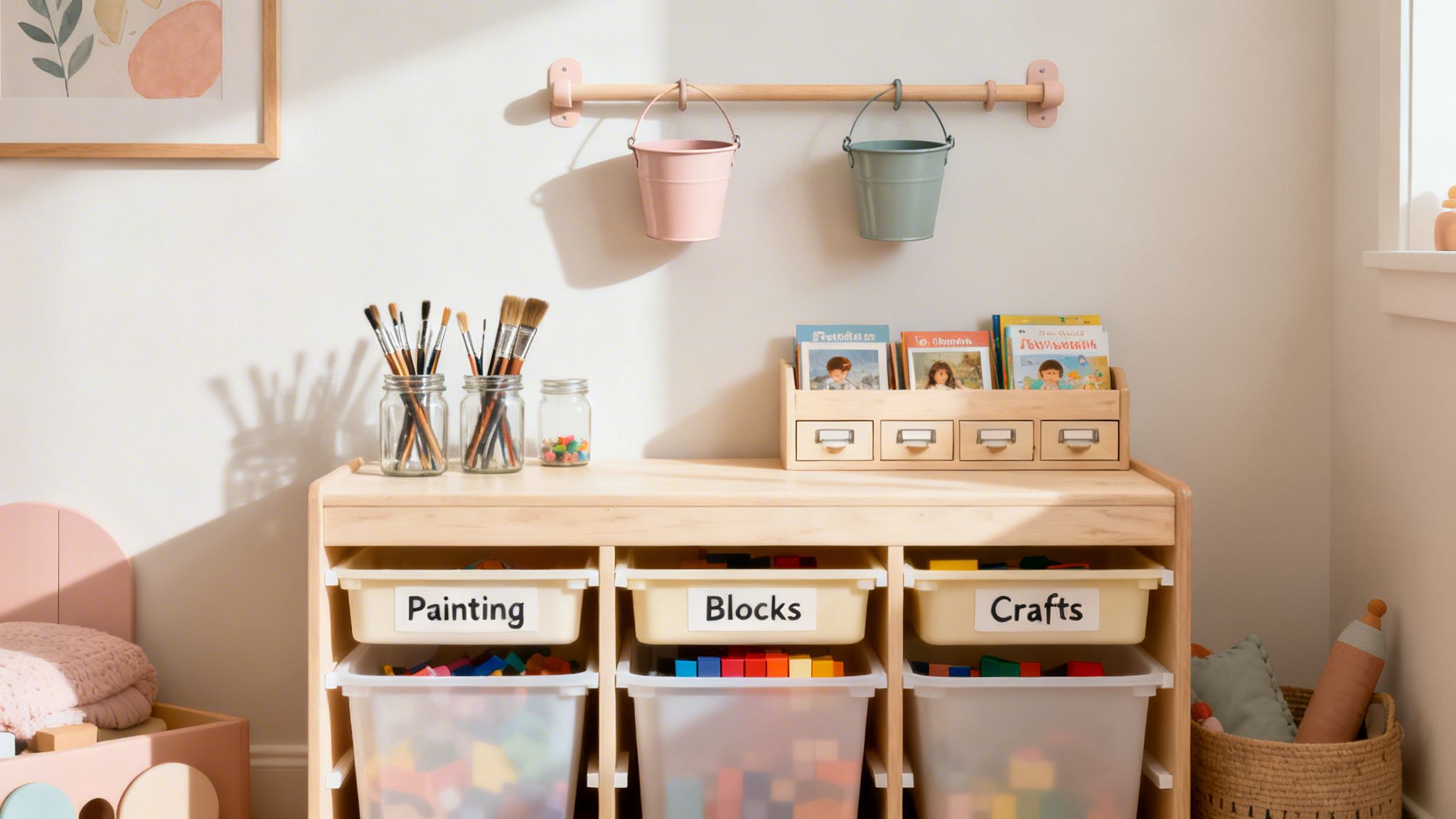
When you get this right, you’re not just keeping the tabletop clear for the next masterpiece. You’re creating a whole, self-contained system that empowers your child to find what they need and, crucially, put it away again themselves.
Make Organisation Part of the Decor
Who says functional can't be beautiful? Your storage choices can actually add to the room's personality while subtly teaching your child how to stay organised. Here are some practical examples:
- Use Clear Containers: Pop things like crayons, colourful pom-poms, and beads into clear jars or pots on a low shelf. This adds a fantastic splash of colour and lets children instantly see what’s on offer. No more rummaging!
- Label Everything with Pictures: For kids who aren't reading yet, picture labels are a game-changer. A simple drawing of a paintbrush on the 'painting' bin helps them sort their supplies on their own. It turns tidying into a matching game.
- Install Wall-Mounted Storage: A simple picture ledge or a rail mounted on the wall above the table is brilliant. You can hang small buckets from it to hold pencils, scissors, and glue sticks, freeing up valuable workspace on the table itself.
The best organisational systems are always visual. When a child can clearly see where everything lives, tidying up stops being a confusing chore and becomes a simple task they can actually master.
Create 'Activity Kits' for Effortless Play
One of the best tricks I’ve learned for using a children's table with storage is to set up 'activity kits'. It’s simple: just dedicate one drawer or bin to a single activity, which makes both starting and stopping playtime incredibly quick.
For instance, a great practical example is creating a 'painting kit' with paper, brushes, and paints all living in one bin. When the creative urge strikes, you just pull out that one bin. When they're done, it all goes back in and slides out of sight. You could do the same for a LEGO® kit, a modelling clay kit, or a sticker book collection. This method is fantastic for containing the mess and makes it so much easier to say "yes" to those spontaneous creative moments.
Your Questions Answered
Even after weighing all the options, a few questions can pop up when you're about to choose the perfect table. We get it! Here are some straight-to-the-point answers to the things parents most often ask.
At What Age Is a Storage Table Most Useful?
You might be surprised at just how early a storage table can become a hub of activity. They’re fantastic for sensory play from around 18-24 months old and will see your child right through primary school for everything from LEGO masterpieces to homework.
A practical example is matching the table to their stage. A toddler will get the most out of easy-to-reach bins they can help tidy up themselves, whereas an older child will appreciate drawers for organising their growing collection of art supplies and school project materials.
How Do I Clean and Maintain the Table?
Good news: keeping these tables looking great is simple. For most materials like wood, MDF, and plastic, all you’ll ever need is a quick wipe with a damp cloth. For a practical example, if your child spills poster paint on an MDF table, wipe it up promptly with a damp sponge rather than letting it soak in. It's best to steer clear of harsh chemical cleaners, as they can wear away the non-toxic finishes that are so crucial for kid-safe furniture.
It’s also a great habit to give the hardware a quick check now and then. Making sure all the screws and joints are snug will keep the table sturdy and safe through years of enthusiastic play.
Are Lift-Top Tables Safe for Small Children?
That’s a question we hear a lot, and it’s a really important one. The thought of a heavy lid is understandably worrying for any parent, but modern designs have a brilliant solution.
When you're looking, make sure the table has soft-close safety hinges. This fantastic mechanism stops the lid from ever slamming shut, controlling its descent so it closes gently every time. It's an absolute must-have feature that protects little fingers from getting pinched, making these popular tables a perfectly safe and practical choice.
Ready to create a beautiful, organised, and personal space for your little one? Explore the full range of customisable storage solutions and gifts at TidyCubs and find the perfect pieces to bring your vision to life. https://www.tidycubs.com